Brown Rock Villa and Its Garden
The Villa des Roches Brunes is a historic late 19th century beachfront villa located in the Normandy region of France (specifically on the top of a cliff near the town of Eritrea/Étretat), which, together with its tiered gardens, constitutes a model of "architecture and nature symbiosis. As a French national historical building, it is not only a material witness to the leisure life of the elite at the end of the 19th century, but also reflects the poetic integration of the natural form and the seaside landscape in the early stage of the "Art Nouveau" (Art Nouveau).
Church of Saint Eulalia
Templo de Santa Eulalia is located near the town of Santa Eulalia, Chihuahua (Chihuahua), Mexico-a "ghost town" (Pueblo Fantasma) that emerged from the mining boom of the 18th century, and is now part of the Chihuahua metropolitan area. As one of the oldest religious buildings in Chihuahua, it is not only a material witness to the symbiotic relationship between mining and religion in the colonial period, but also bears the vicissitudes of the town of St. Oralia from a "mining center" to a "historical site.
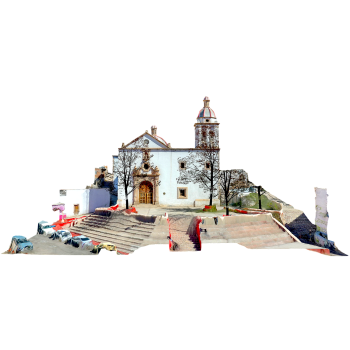
The old church of Santa Ana de la Joya
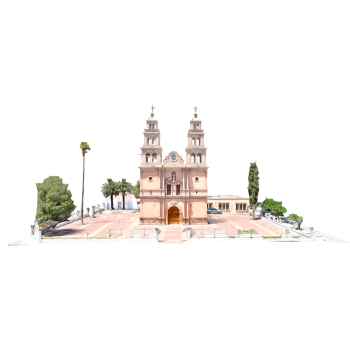
The Church of Santa Ana de la Joya (Templo de Santa Ana de la Joya), located in the city of Satevó (Chihuahua (Chihuahua)) in Mexico, is an important material relic of the history of the "missionary frontier" in the northern part of the state. As a key node of the Franciscan missionary network during the colonial period, it not only carries the mission of spreading Spanish colonial religion, but also integrates the adaptive design of local aboriginal culture and desert environment. it has become a "minority but deeply representative" cultural heritage of Chihuahua.
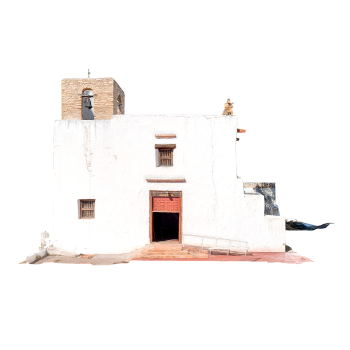
Church of St. Heronimo in the town of Aldama, Chihuahua, Mexico
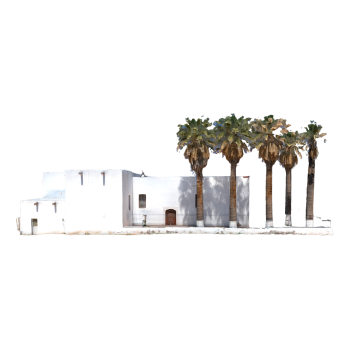
The Templo de San Jerónimo, located in the town of Aldama in the Mexican state of Chihuahua (Chihuahua), is one of the jewels of colonial religious heritage in northern Mexico. As the core witness of the history of the "missionary frontier" in the region, it not only carries the mission of religious communication in the Spanish colonial period, but also integrates local culture and European architectural skills, and becomes the "living history museum" of Chihuahua ".
San Diego de Alcala Church
The church of San Diego de Alcala, located in the town of Aldama, Chihuahua, Mexico, is one of the core representatives of the colonial religious heritage of northern Mexico. It is not only the spiritual center of the local Catholic faith, but also carries the historical memory of the "missionary frontier" during the Spanish colonial period, and witnessed the transformation of the Chihuahua region from an aboriginal settlement to a colonial settlement. The construction of the church was directly related to the "Northern Frontier Mission Program" of the Spanish colonial government in the 18th century. At the time, the Franciscan monks had a dual task: to spread Catholicism to the local indigenous population while consolidating Spanish control over the northern territory of Chihuahua.
Former Carolina Manor in Chihuahua, Mexico
The former Carolina Manor is a colonial revival style manor in Chihuahua (Chihuahua), Mexico, which carries the memory of elite families at the end of the 19th century. Its history and architectural features are deeply bound to the land aristocratic culture of northern Mexico, European aesthetic influence, and modern cultural heritage activation practice. The design of the former Carolina estate is based on a 19th-century European country house, combining materials and traditional craftsmanship from northern Mexico. It is a material relic of the "Caudro politics" of Chihuahua-Louis Terrazas, as the actual ruler of Chihuahua at the end of the 19th century, accumulated wealth through land and power.
Ciudad Juarez Cathedral
The Cathedral of Ciudad Juárez is a central religious and cultural landmark in the northern Mexican border city of Ciudad Juárez, whose history and architecture reflect the city's colonial heritage and modern development. The construction of the cathedral dates back to the Spanish colonial period and was originally a wooden church to serve the religious needs of the local aborigines and colonists. At the end of the 17th century, as Ciudad Juárez (formerly El Paso del Norte) became an important stronghold on the northern Spanish frontier, the church was gradually expanded into a stone building. The existing main structure was completed in 1905 in the neoclassical style.
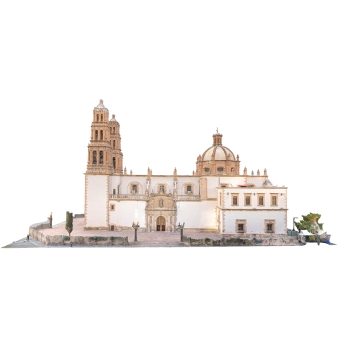
Chihuahua Metropolitan Cathedral
The Metropolitan Cathedral of Chihuahua (full name "Our Lady de Chihuahua Metropolitan Cathedral", Catedral the Basiílica Menor de Nuestra Señora de la Asunción de Chihuahua) is the religious and cultural core of the city of Chihuahua, the capital of the northern Mexican state of Chihuahua, and a typical representative of the integration of Latin American colonial period and neoclassical architecture. The church was founded in 1725 by Spanish Franciscan missionaries to consolidate the spread of religion during the colonial period.
Wuhan shadowless tower
The shadowless tower, also known as Xingfu temple tower, is located in Hongshan Park, 509 Wuluo Road, Wuchang District, Wuhan City, Hubei Province. It was built in the sixth year of Xianchun in the Southern Song Dynasty (1270) and moved to Hongshan Park in 1962.
Ayoka Temple Pagoda
A (ā) Yuwang Temple (Ayuwang [Ashoka] Temple) is located under the peak of Taibai Mountain at the foot of Baozong, Wuxiang Town, Yinzhou District, Ningbo City, Zhejiang Province. It was founded in the third year of Taikang, Emperor Wu of the Western Jin Dynasty (AD 282) and has a history of more than 1700 years. In the second year of Yuan Jia (425) and the twelfth year of Yuan Jia (435) of the Southern Dynasty, the temple was built twice, thus laying the foundation for the scale of the temple. Liang ordinary three years (522 years) to Ashoka temple, temple name established.
Ashoka Temple Stone Pagoda
A (ā) Yuwang Temple (Ayuwang [Ashoka] Temple) is located under the peak of Taibai Mountain at the foot of Baozong, Wuxiang Town, Yinzhou District, Ningbo City, Zhejiang Province. It was founded in the third year of Taikang, Emperor Wu of the Western Jin Dynasty (AD 282) and has a history of more than 1700 years. In the second year of Yuan Jia (425) and the twelfth year of Yuan Jia (435) of the Southern Dynasty, the temple was built twice, thus laying the foundation for the scale of the temple. Liang ordinary three years (522 years) to Ashoka temple, temple name established.
Zhaoqing Guanyin Hall Aunt House
The aunt's house was a unique folk term in Guangdong during the Ming and Qing dynasties, which specifically referred to the place where the group of self-combing women who did not marry for life lived together. Members form an alliance through the ceremony of "combing up" and swear not to marry, forming a female life community independent of traditional marriage.
Zhaoqing forever hall aunt's house
The aunt's house was a unique folk term in Guangdong during the Ming and Qing dynasties, which specifically referred to the place where the group of self-combing women who did not marry for life lived together. Members form an alliance through the ceremony of "combing up" and swear not to marry, forming a female life community independent of traditional marriage.
Xu Village Ancient Building Group
Xu Village ancient buildings are located 20 kilometers northwest of Shexian County, Anhui Province, where Xu Village is located-Xu Village. At the end of the Tang Dynasty, the Xu family moved to a large family and then changed its name to Xu Village. During the Ming and Qing Dynasties, Huizhou merchants flourished. Since then, village construction has developed rapidly. In Gaoyang Village, Dongsheng Village and Huanquan Village, Xu Village, Xu Village, Xu Village, Shexian County, there are a large number of more than 100 ancient buildings from the Ming, Qing and Republic of China periods. Xu Village is "two dragons play with pearls" and "pour water gourd" in the form of feng shui. Fang and Xi Erxi meet under the Gaoyang Bridge and flow into the Lianjiang River. The village in the Ming Dynasty has a large number of buildings and complete categories, preserving more architectural practices of the Song and Yuan dynasties.
Tomb of Xu Guangqi
Xu Guangqi Tomb, located in Guangqi Park, No. 17 Nandan Road, Xuhui District, Shanghai, covers an area of about 10000 square meters. It was built in the 14th year of Chongzhen in Ming Dynasty (1641). Xu Guangqi's tomb faces south and covers an area of about 10000 square meters. There are 10 tombs in total. Xu Guangqi, his wife Wu and four pairs of grandchildren are buried separately. The main buildings include Huabiao, Stone Bridge, Stone Archway, Shinto, Shi Yang, Shi Hu, Shi Ma, Shi Wengzhong, Cross, Zhao Chi and Tuoshan at the back of the tomb.
Wumafang, Wenzhou City
Wumafang, now known as Wuma Street, is a landmark shopping pedestrian street in Wenzhou City. It was first named in the Eastern Jin Dynasty. It was named after the allusion that Wang Xizhi was too punctual for Yongjia and "the five horses in the court. The block is located in the core area of Lucheng District, Wenzhou City. The total length of the main street is 424 meters. The building combines the amorous feelings of the Republic of China and the combination of Chinese and Western styles. Since the Qing Dynasty, shops such as Wuweihe (1882) and Jin Sanyi (1859) have gathered for 100 years, with more than 180 merchants. In 2021, it was selected as the first batch of "high quality Pedestrian Street in Zhejiang Province", with an annual passenger flow of 20.8 million.
Xingsheng Temple Tower
Xingsheng Temple Pagoda is located in Fangta Garden, No. 235 Zhongshan East Road, Zhongshan Street, Songjiang District, Shanghai. It is also commonly known as "Fangta" because of its square body. The tower was built during the years of Xining and Yuanyou in the Northern Song Dynasty (1068-1094), with a total of 9 floors and a height of 42.65 meters. The Xingsheng Temple Pagoda is a brick-and-wood pagoda with a brick body and a square plane. The underground palace under the tower unearthed a large number of artifacts including relics and ancient coins. On November 20, 1996, Xingsheng Temple Pagoda was announced by the the People's Republic of China State Council as the fourth batch of national key cultural relics protection units.
Tangjiasan Temple, Tangjiawan Town
Tangjia San Temple is located in the northwest of Datong Road, Tangjia Village, Tangjiawan Town. It is composed of Shengtang Temple, Wenwu Emperor Hall and Jinhua Temple, so it is called "Tangjia San Temple". It is the largest and oldest temple building in Zhuhai. It has profound historical and cultural connotations and high architectural artistic value. It is a precious material for the study of Zhuhai's local history and folk history. It is also a symbol of the feelings and thoughts of the villagers at home and abroad in Tangjiawan area. In May 2010, it was selected as the sixth batch of cultural relics protection list in Guangdong Province.
Nanshan Temple Tower, Linhai City
Located in Linhai City, Zhejiang Province, Nanshan Temple Tower is a building of the Ming and Qing Dynasties. In October 2019, the list of the eighth batch of national key cultural relics protection units of the Nanshan Temple Tower was incorporated into the seventh batch of national key cultural relics protection units, the Thousand Buddha Pagoda, and was renamed the Towers Group.
Popular Models
Random Model
White sturgeon
307 View
Carnarvon Castle in Wales
259 View
TV Remote Control OBJ Model
317 View
Zhaoqing Guanyin Hall Aunt House
159 View
Saint Pierre Church in France
345 View